Metallurgy Crisis Threatens Budgets of Ukrainian Cities and National Financial Stability
Production cuts in Ukraine's mining and metals sector trigger a cascading chain reaction, leading to declining tax revenues at both state and municipal levels.
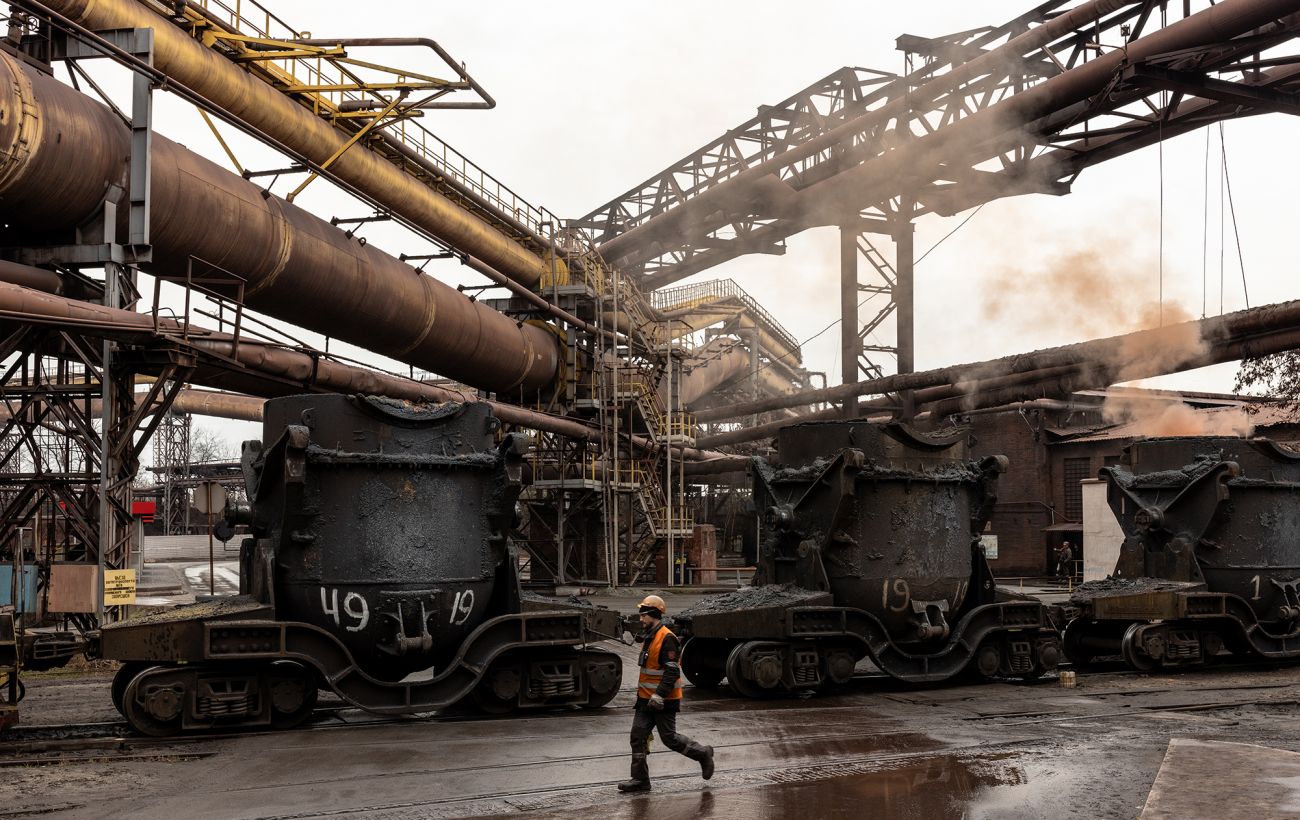 💼Economy
Photo: RBC-Ukraine
Key points
- Ukraine's metallurgical sector faces severe logistical, energy, and security challenges.
- Major steel companies report substantial declines in tax payments and VAT contributions.
- Industrial municipalities are forced to cut spending on infrastructure, healthcare, and education.
- The crisis creates a cascading effect impacting energy, transport, and small businesses.
The ongoing challenges within Ukraine's metallurgical industry are evolving from a sectoral issue into a systemic threat to both state and local finances. Production is severely constrained by Russian shelling, the blockade of Black Sea ports, expensive logistics, restrictions on European Union markets, and a chronic shortage of electricity.
Decline in Tax Revenues and Industrial Output
Leading enterprises in the mining and metals sector have reported significant drops in their financial performance and tax contributions. For instance, Metinvest Group reduced its tax payments by 6% over the first nine months, while value-added tax revenues plummeted by 36%. Similar negative trends affect other major plants, some of which face temporary production halts.
Metinvest CEO Yuriy Ryzhenkov noted that the industry has reached a critical juncture. As steelmakers lose the ability to produce and export effectively, the country risks losing billions of hryvnias in taxes and vital employment opportunities.
Impact on Municipalities and Related Sectors
Industrial cities and communities bear the brunt of this crisis, as their local budgets rely heavily on personal income and land taxes paid by large enterprises. Falling revenues have already forced local authorities to downscale municipal budgets and freeze various development initiatives, including road repairs, utility infrastructure projects, and support for schools and hospitals.
The crisis operates as a cascading chain reaction, where lower industrial output reduces orders for energy providers, railways, machine-building, and small businesses. Consequently, reduced consumer spending hurts the local service sector and retail, generating a new wave of tax losses across the board.
Source RBC-Ukraine — rbc.ua/ukr/news/kriza-metalurgiyi-pererostae-krizu-byudzhetiv-17954… ↗
Read next
 🚨Events
Daytime strike on Kyiv: enemy drone hits residential high-rise building
On the afternoon of November 23, a Russian drone hit the roof of a residential building in Kyiv's Podilskyi district. Emergency services are working at the scene, and fir…
 🏛️Politics
SAP Prosecutor Praises NABU Video Editors Amid Criticism of Investigation Quality
Prosecutor Rostyslav Batig highlighted the professionalism of NABU's media team when questioned about the bureau's reliance on PR over legal evidence.
 ⚽Sport
Carlos Alcaraz Triumphs at ATP Finals: Season Review and Insights
Spanish tennis star Carlos Alcaraz completed the ATP Finals undefeated, cementing his dominant position in men's tennis.
 🩺Health
Scientists Reveal Two Age Milestones When Human Immunity Ages Most Rapidly
New research demonstrates that the human immune system does not age uniformly, experiencing two sharp declines around age 40 and after 60.
 🛡️Security
DTEK Energy Workers Set Annual Record for Restoring Power After Attacks
Between November 16 and 22, energy crews restored electricity for 3.5 million households across several Ukrainian regions, with the Odesa region accounting for the vast m…
 🛡️Security
Satellites Confirm Destruction of Russia's Newest Corvette 'Merkuriy' in Libya
Satellite imagery has captured the sinking of the Russian warship Merkuriy in the Libyan port of Benghazi following a drone attack.