New Details on Russian X-101 Missile Crash in Poland: Recent Production Confirmed
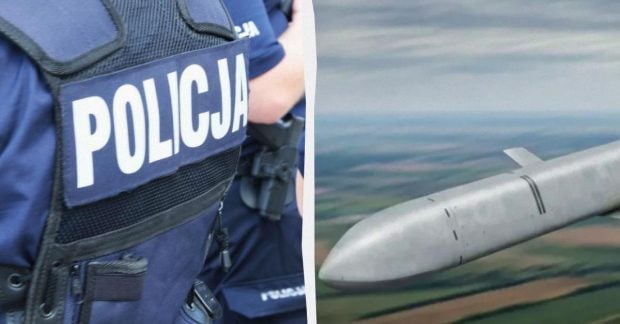
Polish investigators revealed that the Russian X-101 missile that fell in Lublin Voivodeship was manufactured in late 2026 and exploded in mid-air.
 🚨Events
Photo: UNIAN
Key points
- The X-101 missile was manufactured in October-November 2026.
- The missile exploded in the air, scattering debris over several kilometers.
- A Swedish pilot had permission to shoot but failed due to poor visibility.
Procedural actions have been fully completed in the Polish village of Nowy Lipowiec, Lublin Voivodeship, following the crash of a Russian X-101 cruise missile. According to Prosecutor Andrzej Boroń from the District Prosecutor's Office in Lublin, investigators have gathered significant evidence regarding the missile's origin and technical state.
Manufacturing Details and Debris Analysis
The prosecutor noted that the missile was manufactured very recently, specifically in the fourth quarter of this year — in October or November 2026. The investigation also successfully identified the specific plant where the missile was produced. This confirms that Russia is utilizing newly manufactured weaponry for its operations.
Experts concluded that the missile exploded in the air, causing debris to scatter over a wide area spanning several kilometers. Among the recovered fragments is the missile's engine, which weighs several hundred kilograms, along with other critical structural components. The site investigation in Nowy Lipowiec is now officially closed.
Interception Efforts and Weather Challenges
Lieutenant General Ireneusz Nowak, Commander of the Polish Armed Forces Operational Command, shared details about the air defense response. He revealed that a Swedish Gripen fighter pilot had authorization to shoot down the X-101 on November 20. However, the pilot was unable to identify the target due to "extremely difficult weather conditions," preventing the engagement.
During the incident, military forces tracked 11 objects posing a potential threat to Polish airspace, three of which crossed the border. The defense operation involved Polish F-16s, Swedish Gripens, a Saab 340 early warning aircraft, and a Dutch MRTT tanker. Fortunately, the incident caused no casualties or injuries.
Source UNIAN — unian.ua/weapons/rosiyska-raketa-h-101-shcho-vpala-v-polshchi-zovsi… ↗
Read next
 🧠AI Analysis
Awakening of Ancient Bacteria in Permafrost: New Climate Challenges
Researchers from the University of Colorado have found that 40,000-year-old bacteria are capable of active growth after thawing from permafrost.
 🎓Education
Unique harvest: 350-kilogram pumpkin grown in Cherkasy region
A resident of the Cherkasy region grew a giant 350 kg pumpkin on his plot and distributed it for free to the local community.
 🇺🇦Ukraine
US National Intelligence Director: Putin Is Not America's Friend
US National Intelligence Director Jay Clayton stated that Vladimir Putin is not a friend of the United States, particularly regarding the war in Ukraine.
 🩺Health
Consequences of the Russian strike on Dymer: death toll rises to eight
Rescue operations are ongoing in the town of Dymer, Kyiv region, following an enemy attack that has already claimed eight lives.
 👥Society
ISW analysts assess the feasibility of humanitarian corridors on the front line
The Institute for the Study of War explained the difference between evacuation proposals in the Kherson region and the city of Kostiantynivka.
 💡Tech
Another attack on the oil refinery in Novoshakhtinsk: implications for regional logistics
On the night of November 23, the Novoshakhtinsk Oil Refinery in the Rostov region was hit again. The facility is a key supplier of fuel for the Russian occupation forces.